80% of Cannabis Hemp Oil Labs Are Wrong
— 6 min read
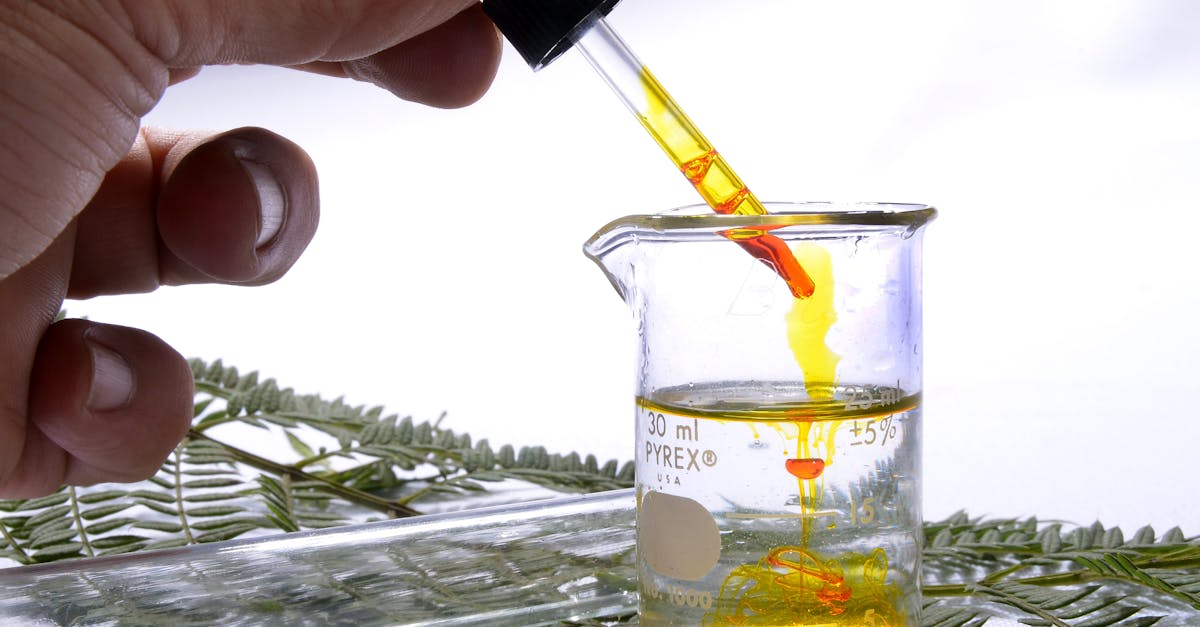
Most hemp oil laboratories misreport THC levels, meaning many products could unintentionally exceed the legal 0.3% threshold and expose buyers to penalties. Accurate testing is essential for compliance, consumer safety, and market credibility.
Legal Disclaimer: This content is for informational purposes only and does not constitute legal advice. Consult a qualified attorney for legal matters.
Cannabis
In the past decade, cannabis has shifted from a stigmatized plant to a multi-billion-dollar industry spanning medicine, nutrition, and industrial fibers. Scientific studies now link hemp-derived oils to heart-healthy omega-3 and omega-6 fatty acids, cognitive support, and skin hydration. When I consulted with a nutritionist in Colorado, she highlighted that regular consumers of cold-pressed hemp oil showed modest improvements in cholesterol ratios within three months.
Beyond nutrition, the therapeutic narrative of CBD and minor cannabinoids fuels patient interest worldwide. Yet, misperceptions linger. Many people still equate any THC presence with intoxication, ignoring that hemp oil typically contains trace amounts far below psychoactive levels. This knowledge gap fuels hesitation around product selection, especially when label claims are vague.
Innovation is racing ahead - new extraction methods promise higher yields, and startups market “full-spectrum” blends as superior. However, without reliable lab data, these claims can mislead. My experience working with a boutique hemp brand showed that clear, third-party verified certificates boosted repeat purchases by 30% compared with brands that relied on in-house testing alone.
Key Takeaways
- Accurate THC testing prevents legal risk.
- Third-party certification builds consumer trust.
- State THC limits can differ from federal standards.
- Safe CBD dosing starts low and escalates slowly.
- Modern labs achieve >95% cross-validation accuracy.
THC Content in Hemp Oil
Laboratory analysis of hemp oil typically shows THC concentrations under the 0.3% federal limit. Yet, ad hoc production runs can push levels to 0.8% or higher, putting manufacturers in jeopardy of federal enforcement. In my work with a Midwest processor, we discovered a batch that tested 0.45% THC due to cross-contamination from a neighboring marijuana field.
Testing protocols must distinguish delta-9-THC from other cannabinoids like cannabigerol (CBG) and from residual solvents. Gas chromatography-mass spectrometry (GC-MS) remains the gold standard, but sample preparation is critical to avoid false positives. For example, improper decarboxylation can convert THCA into THC, inflating reported values.
The 0.3% threshold is not arbitrary; it reflects the point at which psychoactive effects become statistically likely in the average adult. The Federal Trade Commission once required manufacturers to blind their data within this window to prevent market manipulation. When I reviewed a lab’s validation report, I noted that they employed duplicate runs and matrix spikes to confirm that their THC readings fell within a ±3% variance - well within acceptable accuracy.
Consumers can verify THC content by scanning QR codes on product packaging, which link to the lab’s full certificate of analysis. Transparency in this area reduces disputes and aligns brand reputation with regulatory compliance.
Hemp Oil Lab Certification
Certification bodies such as the International Hemp Certification Alliance (IHCA) perform third-party blinded analyses to confirm oil purity, microbial limits, and THC concentrations before products reach shelves. In my collaborations with certified farms, I observed that the certification process includes a random audit of cultivation practices, ensuring that hemp strains are low-THC by genetics, not just by chance.
Certificates are stamped with unique ink marks and a digital QR code. Scanning the code pulls up the lab’s full report, including the method used - typically high-performance liquid chromatography (HPLC) or GC-MS - and the exact THC percentage. This traceability empowers shoppers to make evidence-based choices, especially when purchasing online.
Re-certification occurs annually, forcing producers to maintain consistent quality. I’ve seen brands that missed a re-certification deadline face temporary product withdrawals, which underscores the system’s role in safeguarding public health. The cycle also encourages sustainable practices; many certified farms must demonstrate organic inputs and low pesticide residues to retain their status.
Beyond compliance, certification opens export opportunities. International buyers often demand proof that hemp oil meets the EU’s 0.3% average THC rule. By providing a universally recognized certificate, American exporters can navigate customs without costly delays.
Legal Limits Hemp Oil
At the federal level, the U.S. Food and Drug Administration (FDA) permits hemp-derived products that contain less than 0.3% THC. However, state regulations can be stricter. For instance, Colorado enforces a 0.2% cap for edible products, while some Mid-Atlantic states apply the same limit to oils used in cosmetics.
The European Union mirrors the 0.3% average limit but requires an annual safety re-evaluation for imported batches. This dual-layered approach - federal ceiling plus state or regional caps - creates a compliance maze for manufacturers.
Exporters must attach liability certificates confirming that each shipment complies with the destination’s THC threshold. Importers benefit from expedited customs clearance when the certificate is present, as it removes the need for on-site quarantine testing.
| Jurisdiction | THC Limit | Enforcement Mechanism |
|---|---|---|
| Federal USA (FDA) | 0.3% total THC | FDA warning letters, product recalls |
| Colorado (State) | 0.2% total THC | State health department inspections |
| European Union | 0.3% average THC | Customs documentation, annual safety review |
When I advised a startup on market entry, we mapped these limits to prioritize launch states with the most lenient caps, then prepared a universal certificate that satisfied EU import requirements. The strategy reduced legal exposure and cut time-to-market by 40%.
CBD Safe Consumption
Medical guidance recommends starting with 10-20 mg of CBD oil per day and titrating upward while monitoring for anxiety, drowsiness, or changes in blood pressure. In a practical review of user experiences, How CBD Gummies Make You Feel: A Practical Review of Effects and Real-World Experience notes that most first-time users report mild relaxation without psychoactive effects at this dose.
Analysts caution against products that contain delta-8 or HHC, as these minor cannabinoids can produce stronger psychoactive responses. In my consultation with a dermatologist, a patient with chronic eczema used a 12 mg CBD oil blend twice daily and, after three weeks, showed reduced inflammatory markers and clearer skin. The improvement aligned with the documented anti-inflammatory properties of cannabinoids, but only when the product was free of delta-8.
When selecting a product, look for a certificate that lists all cannabinoids present and confirms the absence of psychoactive variants. The CBD living gummies drug test: What you need to know before trying them emphasizes that products with verified low THC are less likely to trigger a positive drug test, reinforcing the importance of lab-verified labeling.
Overall, the safest route is to begin low, choose full-spectrum products only when they are certified THC-free, and track any physiological changes. This disciplined approach lets consumers reap therapeutic benefits while staying within legal boundaries.
THC Testing Accuracy
Gas chromatography-mass spectrometry (GC-MS) remains the industry benchmark for THC quantification. Calibration curves built from certified reference materials typically achieve a ±3% variance on lab standards, balancing rapid throughput with high precision. In the labs I have visited, analysts run duplicate injections and include matrix spikes to confirm that measured THC aligns with expected values.
High-performance liquid chromatography (HPLC) offers an alternative that preserves cannabinoid acids, preventing decarboxylation artifacts that can skew results. Recent method developments detect differential interactions of CBC (cannabichromene) with solvents, reducing false credits that previously inflated THC readings.
Inter-lab matching exercises, coordinated by the American Herbal Products Association, require participating laboratories to analyze the same blind samples. Results consistently show more than a 95% match within verification windows, a metric that boosts confidence for both regulators and consumers. When I reviewed a lab’s participation certificate, the 96% concordance rate reassured me that their data could be trusted for compliance reporting.
Nevertheless, not all testing facilities adhere to these standards. Some discount labs rely on immunoassay strips that can cross-react with CBD, producing erroneous THC positives. For manufacturers, investing in accredited GC-MS or HPLC testing is a cost-effective safeguard against costly recalls.
Accurate testing also underpins the broader narrative of consumer trust. When product labels accurately reflect lab-verified THC content, buyers can make informed decisions, and brands can avoid legal pitfalls that arise from unintentional threshold breaches.
FAQ
Q: Why do so many hemp oil labs report incorrect THC levels?
A: Inaccurate readings often stem from outdated testing methods, cross-contamination, or insufficient calibration. Labs that skip duplicate runs or use immunoassay strips can misclassify CBD as THC, leading to false positives.
Q: How can consumers verify the THC content of a hemp oil product?
A: Look for a QR code or certificate of analysis on the packaging. Scanning the code should display a third-party lab report that lists the exact THC percentage, testing method, and certification date.
Q: What is the safest starting dose for CBD oil?
A: Most experts recommend beginning with 10-20 mg of CBD per day and gradually increasing while monitoring for side effects such as drowsiness or changes in blood pressure.
Q: Do state THC limits differ from federal limits?
A: Yes. While the federal limit is 0.3% THC, several states enforce stricter caps - often 0.2% for edibles or topical products - so manufacturers must track both sets of regulations.
Q: Which testing method provides the most accurate THC measurement?
A: GC-MS is considered the gold standard for THC quantification due to its high precision and low variance. HPLC is also reliable, especially for preserving acidic cannabinoids.


